Sunday, August 14, 2016

Partial Nudity (ZOO, Edinburgh Fringe)


Partial Nudity is the inaugural production of the fledgling Fandango theatre company, set up by actors Joe Layton and Kate Franz to fulfil their dream of staging a show at the Edinburgh Fringe. Their raison d'etre is to deliver a message that matters, focusing on sexual politics. What better way to do that than to stick one man and one woman in a room together and make them talk?

Darren is a stripper from Bolton looking forward to, but understandably anxious about, his first "full strip". His schtick is the sexy American cop, complete with cap, plastic handcuffs and mirrored shades. He's your stereotypical jack-the-lad, a cock o' the walk who thinks he's a major draw for the ladies simply because they pay good money to ogle his manhood (but let's face it, most women burst into laughter when they see a man's penis).

Nina is a stripper from America who is studying at Manchester University and takes off her clothes in order to pay her student debts. Her schtick is sexy nurse and naughty nun, equipped with fishnets, high heels and leather basque. She is jaded by the stripping industry, seemingly scarred by leering men's assumption that strippers = hookers, and that because they're paying to see most of the goods, they can get the rest for free.

Care Takers (C, Edinburgh Fringe)


Most of the time, when you see a depiction of homophobic bullying in the school environment, it's told either from the child's perspective, or is inclusive of it. But what Billy Cowan's Care Takers does is completely remove the victim and drills down, beneath and behind the scenes, to see what happens when the system gets involved.

Written as part of a research project by Edge Hill University in Ormskirk, Lancashire, Care Takers is a blisteringly strong script handled with confidence and passion by two heavily invested, sensitive performers. Set entirely within the office of the deputy head of an inner-city school, Care Takers examines the issue of institutionalised homophobia by presenting both sides of a very compelling argument.

Wilde Without the Boy (Assembly Hall, Edinburgh Fringe)


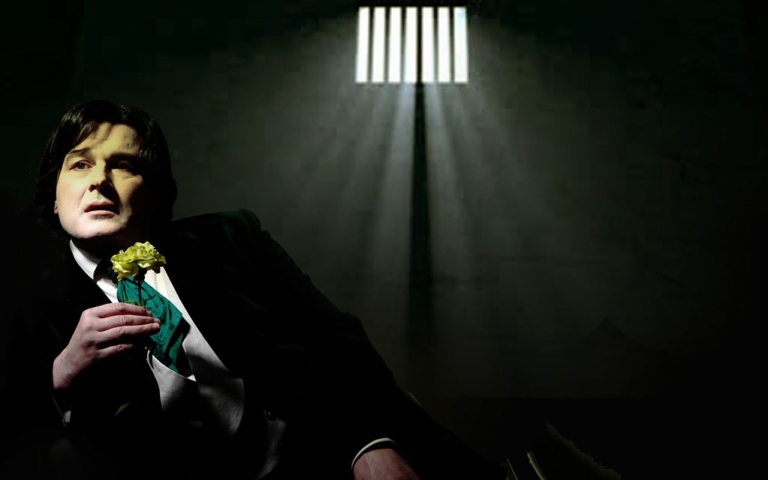
On Tuesday, May 18th, 1897, the once celebrated, now disgraced socialite and playwright Oscar Wilde was released from prison after a two-year incarceration for gross indecency. Between January and March that year, Wilde had been permitted by the prison governor to write a letter to his erstwhile lover, Lord Alfred Douglas (Bosie), in an attempt at both catharsis and rehabilitation.

The fact he was only allowed to write it one page at a time, with each page being taken away on completion, meant Wilde was unable to read his 20-page manuscript as a whole. Neither was he allowed to actually send the letter to its intended recipient, but Wilde did get to take it away with him on his day of release from prison, which is the day Cahoots Theatre Company's Wilde Without the Boy takes place.

Meet Fred (Summerhall, Edinburgh Fringe)


It used to be a trailblazing, groundbreaking novelty to break the fourth wall in theatre, to acknowledge the fact there was an audience watching you and include them in the performance. But with Meet Fred, there is no fourth wall to break in the first place. What you see is presented as real, a show within a show.

Hijinx Theatre specialises in working with actors who have learning disabilities, training them to work at a professional level of performance. Their latest show, Meet Fred, uses Japanese Bunraku, invented more than 300 years ago, to bring to life Fred, a three-man puppet who firstly has to come to terms with the fact he is a puppet, and then cope with having three strange men stand behind him to move his limbs around, and give him voice. It's best not to think about how this works for too long as it makes your brain hurt a little. The idea of a self-aware puppet is not new, but the story Hijinx tells is most probably unique.

Nosferatu's Shadow (Sweet Grassmarket, Edinburgh Fringe)


Is it not better to be remembered for just one thing rather than nothing at all? Max Schreck doesn't think so. He'd rather be completely forgotten, lost in the mists of time, than be remembered for the one role which has endured almost an entire century.

Schreck will forever be associated with his most indelible role, that of Count Orlok in the 1922 German Expressionist silent horror, Nosferatu. Even if you've never seen the film (and let's face it, you have to have a pretty specialist interest to sit and watch a 90-minute silent black and white movie these days), you'll know the part Schreck played from the clips, stills and spoofs that pepper popular culture. The bald, pointy-eared, spike-toothed, claw-fingered ghoulish silhouette which climbs a flight of stairs and terrified generations to come.

But Max Schreck was more, much more than a silver screen vampire. He was a stage actor of phenomenal renown in Germany, a performer of admirable and admired talent who conquered comedy and tragedy, romance and horror, cabaret and recital. He worked with Bertolt Brecht and Max Reinhardt, and despite his forbidding countenance, was actually a very cultured, thoughtful and nature-loving individual who preferred the forest to the city and was devoted to his beloved wife of 26 years.

Saturday, August 13, 2016

Dark North & Hungry Jane (The Space on Niddry Street, Edinburgh Fringe)


David Skeele, the writer and director of these two tales of horror all the way from Pennsylvania, says that when fright is done right, it should include "brilliant special effects, psychological suspense and believable performance by actors".

Which is why it's all the more disappointing that Slippery Rock's presentation of Hungry Jane and Dark North fails in much of this. Neither tale is scary, merely spooky. Neither tale has "brilliant special effects" - a rocking chair which rocks itself would be unsettling if the motor and wire which powered it were not so visible. And although there's undeniable mystery in the stories presented, there is very little suspense generated in what is a sadly under-powered production.

Two Kittens and a Kid (The Space on the Mile, Edinburgh Fringe)


Story is all. You can have all the flash-bang-wallop of a West End jukebox musical, or the lavish art design and pomp of a grand opera, but without an engaging story to tell, you have nothing.

And boy, does Christopher Wilson's intensely personal and moving Two Kittens and a Kid have a humdinger of a story, made all the more affecting because it is absolutely true. These things happened to him, and their legacy goes on. How Wilson manages to perform this show day in, day out is astounding. Two Kittens and a Kid (A Gay Man Raising His Inner Diva) is obviously his catharsis, and he scoops up the audience on a truly rollercoaster ride along the way.

So what is this story about? It would be unfair to give too much away, as it is the way the audience is drawn into Wilson's experiences that makes the ending all the more powerful. It's best not to know in advance how this show ends, as it would most definitely lose its strength, but it wouldn't be worth seeing (or writing a show about) if there weren't heartache and tragedy.